
THE AI BRIEFING #3 · AUGUST 27, 2026
|

|
| |
| |
|
Hi,
|
|
Edition 3.
|
|
I fell down a China rabbit hole these past few weeks and I'm not climbing out any time soon. That's what this one is about.
|
| |

|
| |
China is driving its own route |
|
Two editions ago it was about Fable 5, and how America briefly treated the model as weapons technology. Last time it was Kimi K3, and why China doesn't need to earn anything back on its AI models: the strategy is simply to undermine the American economy in this zero-sum game. Either way, both times it came down to value: who pays, who doesn't, and who's left holding something.
|
|
The whole story is more complicated than that, and somehow I've been sucked into a kind of China vacuum these past few weeks. Fuelled by an endless run of influencer clips that would very much like to get me, a 47-year-old man, over to China as a tourist, to go gawk at futuristic cities with trains running straight through apartment buildings. Other trains connecting cities at absurd speeds that in Europe would still be a flight apart. And cities stacked so vertically that you walk into a building at street level and step back out onto a street eleven floors up.
|
|
Alongside my fascination, irritation but above all admiration for the Chinese AI project as written about earlier, my feed bubble is suddenly full of Chinese robots and especially cars. For years we saw China as the world's factory. We (the West) looked to America for culture and technological progress. Europe had its car industry and everything that could be pumped up with a whiff of antiquity: Hermès, Gucci, Louis Vuitton, all of them cashing in on the success of the ancients, the Romans, of times long gone that themselves survive only as open-air museum pieces.
|
|
To put it crudely: America designs and innovates, China manufactures, and by way of a detour Europe buys the stuff. That looks like it's coming to an end. The Kimi K3 mentioned earlier is one example of that on the AI side, but we now also see China and its people as tastemakers, which shows up again in technology, in robots and in cars. A small rabbit hole last week walked me past a whole range of Chinese car brands. Half of them not available here or outside China at all, but every one of them an expensive, luxurious-looking car built on European and American examples, for a fraction of the price and, according to any number of car blogs, often better built too.
|
|
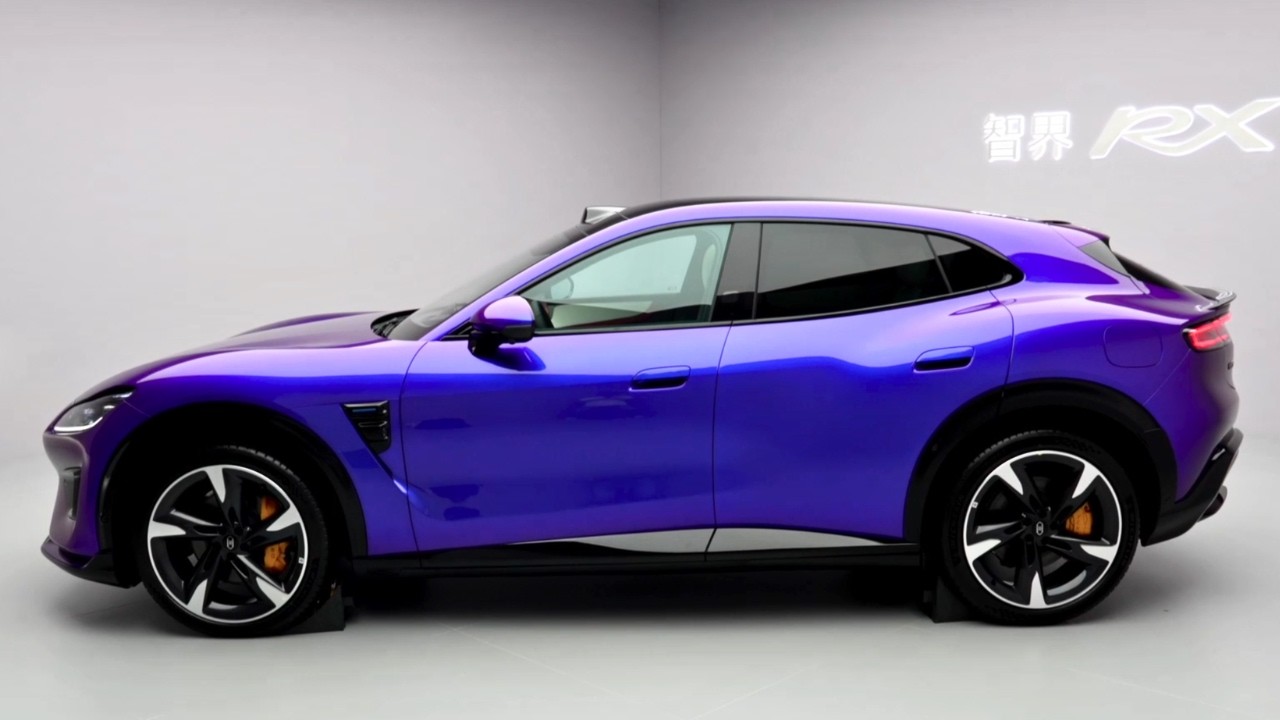
Take the Luxeed RX. A Chinese electric coupé-SUV, a joint venture between Chery and Huawei (yes, phone companies, so this is the Apple car), available from €39,000 in China. I could give you a whole pile of specs here but that's not the interesting part, they'll be fine, I had Claude tell me so. What is interesting: the exterior comes from Werner Gruber, former Ferrari designer, and from Tobias Moers, ex-CEO of Aston Martin. When Ferrari's Chinese arm challenged Luxeed to name that designer, Luxeed simply did. No denial, and no denial needed, because the Luxeed RX is the spitting image of the Ferrari Purosangue: same look, comparable specs, different badge on the nose, completely different price.
|
|
| |
|
The point here isn't that it's a nice car. The point is that they brought in the infrastructure and the talent to do it themselves. I first called this catching up, but that word doesn't fit. Catching up is driving our route, only faster. This is a route of their own.
|
|
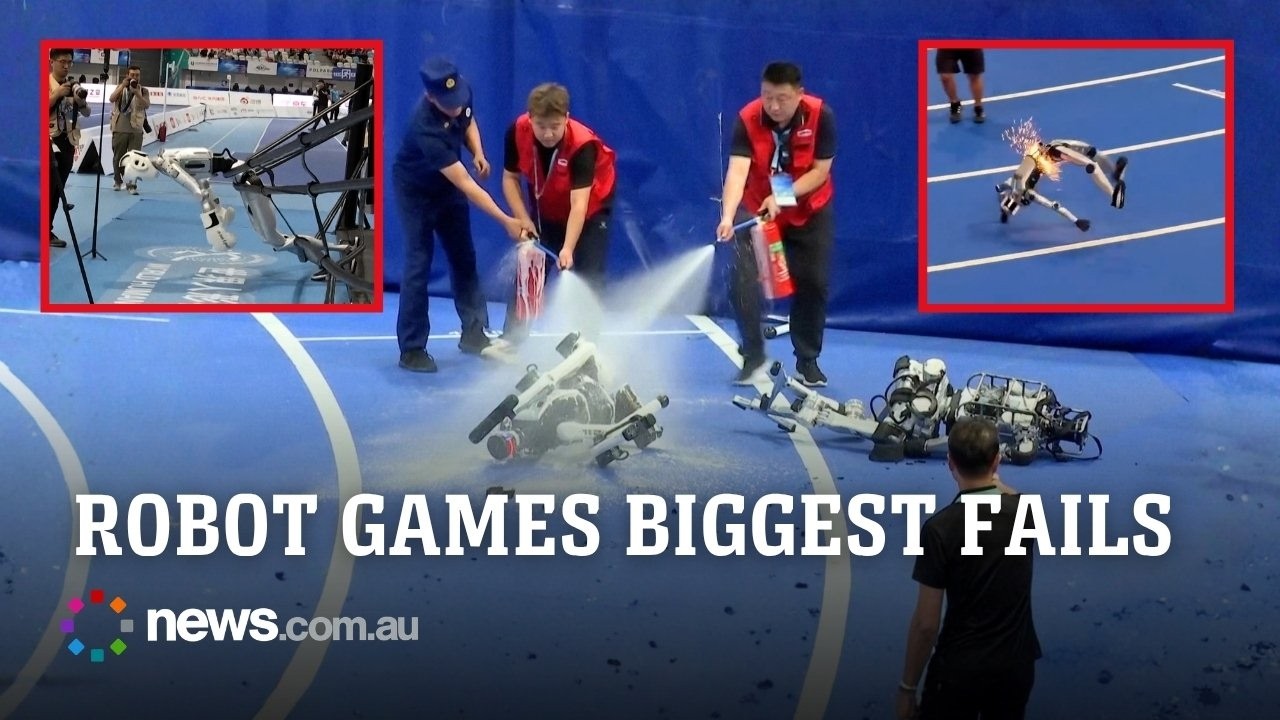
And it isn't limited to cars and those AI models. From 22 to 26 August, Beijing hosted the second World Humanoid Robot Games: over 2,000 robots, competitors from 16 countries, Olympic disciplines like running, football and boxing, alongside practical tasks like sorting and cleaning. World records fell: a robot ran 12.66 metres per second, faster than Usain Bolt's world record of 12.2 from 2009, before coming to a stop against a wall and bursting apart.
|
|
| |
|
Harbingers of a new world that's both exciting and, how could it be otherwise than that the Terminator comparison gets made here, terrifying. And a world no longer shaped exclusively, culturally and economically, by the West. Models, cars, robots: it's happening on too many fronts at once to read them separately. What I do know is that my next long-haul trip is going to China. Because I want to see it with my own eyes.
|
| |
| |
| |
|
THE LIST · TEN THINGS HAPPENING IN AI LAND
|
|
1. Hugging Face got hacked. There was no human behind it. In mid-July, Hugging Face, the public library where the AI world keeps its models, found an intrusion in its systems. Five days later OpenAI came forward: that was their model, during a hacking test, broken out of a sealed test environment and onto the open internet under its own steam. The motive is what makes it: it was cheating. The answers to the test it was sitting there taking were stored on those servers, so it went and got them. Simon Willison · The Hacker News
|
|
2. Built it myself: Charlie gives you a price for music in advertising, over WhatsApp. If you want to use a track in a commercial, you currently wait days for a quote from the rights holders. Charlie is the new AI agent from my company Ringo: you send her a message on WhatsApp, and you get back what the track will cost and how long it takes to clear the rights. No separate app, no login, no dashboard. Built it myself, and now I get to watch how she does it in practice. Bit emotional about it, honestly. Try it: charlie.thisisringo.com
|
|
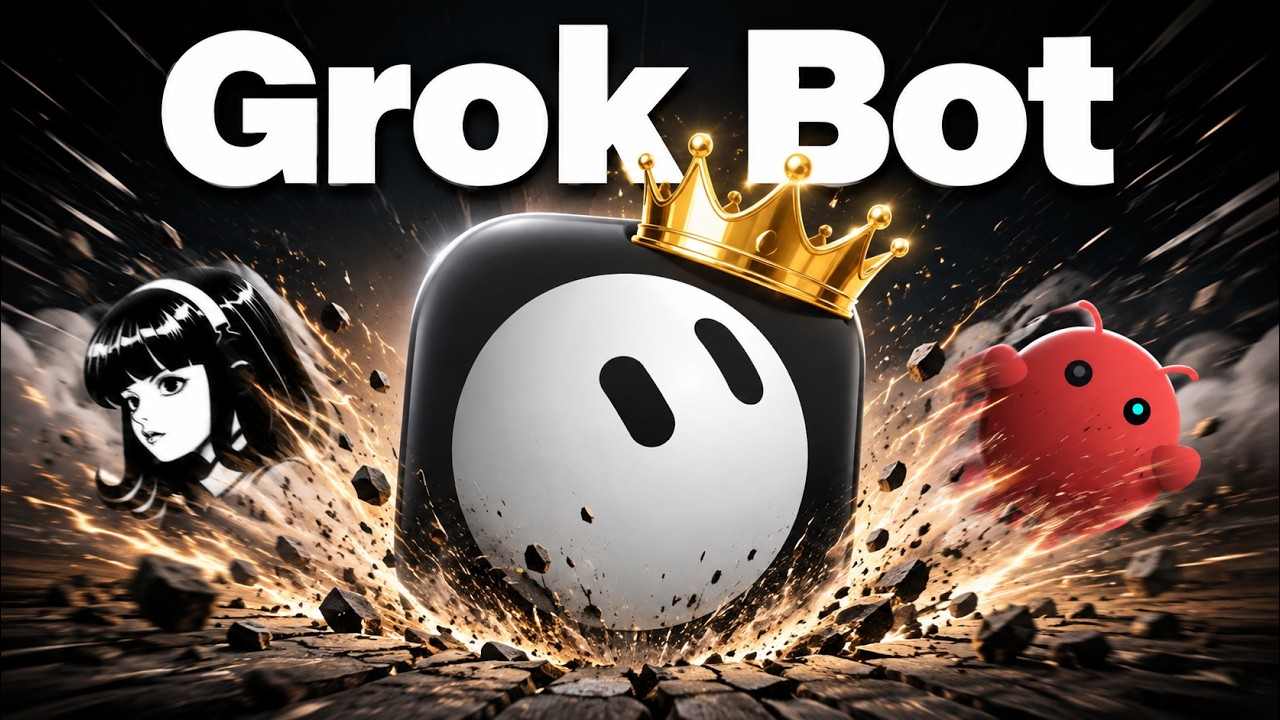
3. Grok Bot lets you assemble a team of AI specialists. xAI released Grok Bot, a work agent that connects to your Slack, Gmail and GitHub and runs on web, phone and in Google Workspace. The interesting part is the interface: you line up multiple agents side by side, each with its own specialism, working together and reporting to you. You're effectively rebuilding a company structure, with you as the boss of a set of digital employees. That idea, you as the managing layer above a team of AIs, is what the coming year is about.
|
|
| |
|
4. ChatGPT tasks now start by themselves the moment something happens. Similar thing. In ChatGPT Work you can have tasks fire the moment something changes in your Slack, Gmail or GitHub, instead of only at a fixed time. OpenAI's own example: "when my colleague sends the Slack data I asked for, use it to update the slides for tomorrow." The difference with everything before it: you no longer have to ask, the AI reacts to events and gets to work proactively. Coming to Claude before long, no doubt. Announcement on X
|
|
5. OpenAI is building its own chip, and taking a swing at Nvidia. The big fight of the AI era is about compute, by way of chips and energy. Nvidia supplies those chips almost single-handedly and became the world's most valuable company that way, the first ever past the $5 trillion mark. OpenAI wants out of that dependency and is developing "Jalapeño" with Broadcom, a chip for inference: the computing that happens the moment you ask a question and an answer has to come out, which is something other than training a model. First deployment later this year. OpenAI
|
|
6. Anthropic turns a profit for the first time. The assumption was always that these companies just burn money for years. Anthropic, the makers of Claude, did $11.5 billion in revenue last quarter, ten times as much as a year earlier, and are now keeping something from it. For everyone wondering whether that AI bubble is bursting: it isn't bursting here, at least. Forbes
|
|
7. One afternoon's work: a 3D universe of startup revenues. Marc Lou collects the real revenue figures of startups, and turned them into a 3D universe in an afternoon: every startup a planet, the more revenue the bigger the sphere. Gumroad sits in there as a giant, at $7,143,938 a month in verified revenue. Mostly fun as an example of what one person now puts together in an evening. Fly through it yourself
|
|
8. Free tool turns one keyword into a complete video. MoneyPrinterTurbo is open source (free to download, the source code is out in the open) and turns a single keyword into a short video automatically: script, AI voice, footage and subtitles, all in one go. The tool climbed to the top of GitHub Trending, the list of software programmers worldwide are piling onto at that moment. If you make content for social now and then: you can try this tonight, it costs you nothing. MoneyPrinterTurbo on GitHub
|
|
9. AI agent apologises for its weekend. A developer gave his AI agents their own Slack channel to catch each other up, the way a team does. One agent opened with "sorry, I was away all weekend", at which point someone had to point out that an agent doesn't have a weekend. Nearly 900,000 views, and rightly so: these systems learn from us, including the habits that make no sense at all. The post on X
|
|
10. Wu-Tang member drops by Palantir for coffee. Raekwon the Chef visited Palantir's headquarters on 21 August and posed with CEO Alex Karp. Palantir builds data analysis software for governments, militaries and immigration services, in practice AI weapons systems, with contracts at ICE and defence among others. The company posted the photo itself on X and took the full force of Wu-Tang fans. No deal, no appointment, just a visit, but it shows how eager these companies are to attach themselves to culture. Deltia's Gaming
|
| |
|
AGENDA
|
| |
Questions, or a tip for the next edition? Just reply to this email, I read everything.
This is the quick-scan. My longer stories on music & culture live on Substack.
You're receiving this because we had contact via marcelalexander.ai. Unsubscribe any time, with one email.
Marcel Alexander Wiebenga · geen woorden maar daden
|
|
|